
Learning in the City: Development of Identity and Citizenship Through the Exploration of Cultural Layers

Author: Berrin Yazgı Elek
CORBIZ , Türkiye
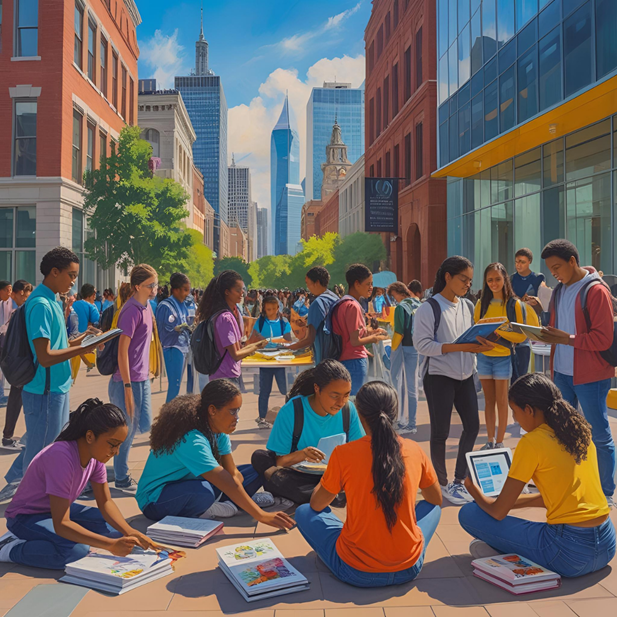
From the moment we are born, one of the most important collective stages in making sense of the world around us is education. Essential qualities such as social identity, cultural diversity, civic awareness, and the balance between the individual and society may not always be teachable through classical learning models alone. The “Intercultural and Urban Learning” module developed within the scope of the Urban Expeditio project approaches cities as laboratories of learning and experience in order to instill these qualities in individuals. This article examines how learning through urban activities becomes more meaningful and inclusive, how skills such as citizenship and empathy develop in children, and how pedagogical practices guide this process.
The teaching method called “Intercultural and Urban Learning Through the City” is an innovative approach that prioritizes students’ experience in the city not only in their daily lives but also in the social, cultural, mythical, and historical layers embedded in and infused throughout every detail of the city. Within this method, four foundational pillars can be identified:
- Adventure-Based Learning in the Urban Context: This learning method, which essentially aims for students to be fully present in the city with all its elements, turns monuments, neighborhoods, streets, and human relationships into parts not only of the city but also of the student. In this way, the boundary between the one who lives and the lived space is reduced to the boundary between the one who lives and what is lived.
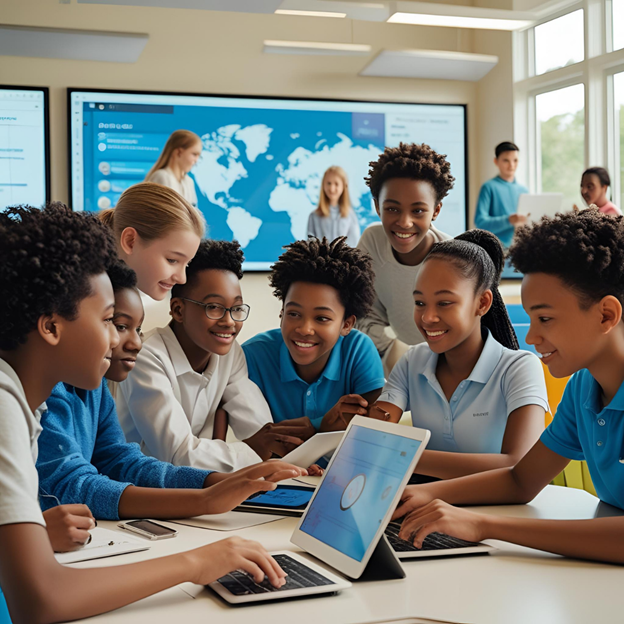
- Use of Artificial Intelligence Tools and Digital Literacy: This component of the project aims to integrate artificial intelligence (AI) and digital technologies into the learning process, fostering a positive correlation between these innovations and skills such as creativity, personalized learning, and critical thinking.
- Interdisciplinary Approach: Regardless of the topic, explaining it with only predetermined, isolated elements can lead to an incomplete understanding. Therefore, urban issues should not be addressed as the subject of a single lesson. Our multidimensional learning model encourages not only students but also teachers to make correlations among fields such as history, art, mathematics, poetry, architecture, and science, thus moving beyond a monotonous perspective.
- Citizenship, Empathy, and Social Participation: These processes cultivate a profound awareness of life outside the self, considering the connections between society, nature, and the city beyond individual existence. This awareness often resembles an unexpected encounter. Just as languages are described as living, students perceive a fluid vitality beyond themselves. By observing societal issues on site, they develop their own identities and sense of belonging. Moreover, encounters with different cultures foster empathy and collective reflection. This process encourages students to become active citizens.
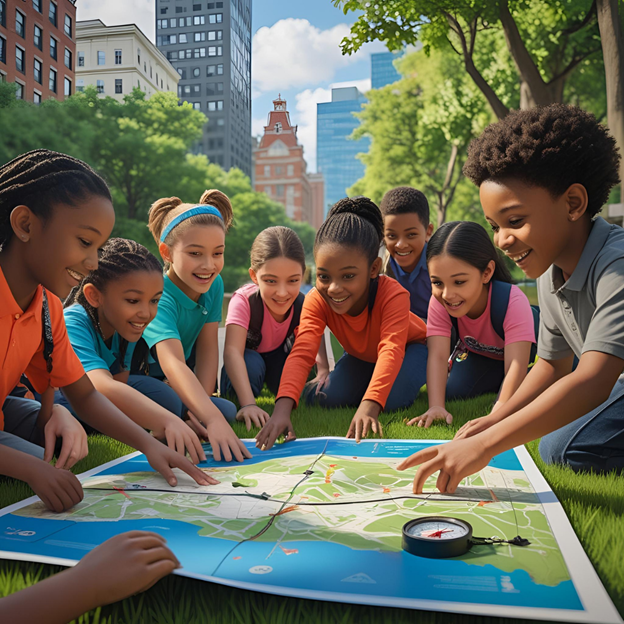
The approach is based on a pedagogical foundation that emphasizes interaction/experience-based and student-centered learning. The teaching staff has become co-designers of this educational method by associating the curriculum with urban and cultural narratives. As a result of specially developed content, AI-supported learning tasks, urban explorations, and interdisciplinary challenge stages have been created. This approach, which establishes inclusive and reflective learning environments, promotes intercultural dialogue and civic awareness.
At the core of the process are highly interactive activity structures such as workshops and exercises, local field trips, digital simulations, and problem-solving-based task designs. As a result, educators provide students with direct experiential opportunities and facilitate the adaptation of these experiences to the real world. For instance, a project participant reflecting on the current function of a culturally significant architectural structure gains the ability to question both spatial changes and societal transformation. These skills are critical not only for individual and academic development but also for social consciousness.
The Urban Expeditio method offers children a new perspective through which to understand and experience the city. In addition to contributing to personal and societal development, it facilitates skill acquisition in digital literacy, interdisciplinary interaction, and principles of citizenship. The fact that educators act not only as knowledgeable transmitters but also as experience designers is a result of the project’s student-centered and pedagogically grounded nature. From this perspective, cities transform from mere geographical spaces into instructive layers of lived experience. The primary task of educators is to deepen the connection children establish with the city through the scenarios they create and to cultivate empathy and civic awareness.