
Urban Literacy: Why Understanding the City Is Essential for Today’s Youth

Author:
Aleksandra Prokopijević
Creative Station
The ability to understand a city — its rhythms, spatial flows, people, infrastructure, and hidden mechanisms — is becoming one of the key competences of contemporary society. For young generations growing up in a digitally connected yet spatially fragmented world, the capacity to interpret urban space is just as important as digital literacy.
This is precisely why the Urban Expeditio project places urban literacy at the center of its methodology, combining Adventure Learning with AI technologies to help students aged 14–18 develop a deeper understanding of the environment they live in.
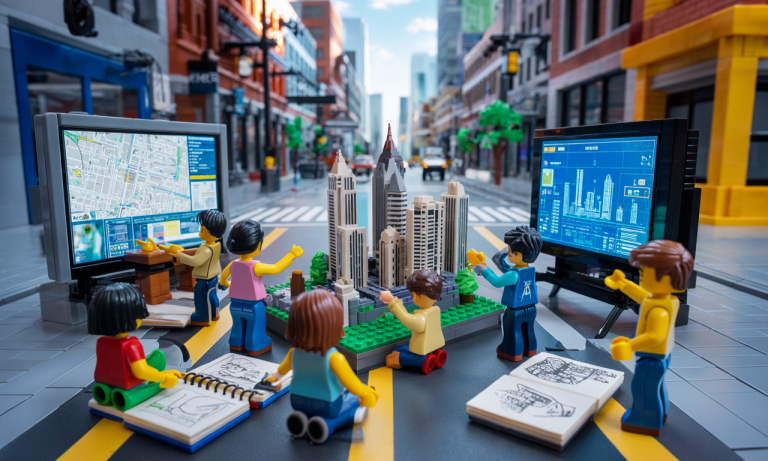
The City as a Living Organism — Learning from the Real World
For young participants, the city is not an abstract map — it is a series of lived experiences: the path to school, the square where they meet friends, the shortcut only locals use.
When students engage in AI-assisted Treasure Hunter tasks in real urban space, they begin to interpret their surroundings differently:
they notice movement patterns,
identify functional and non-functional places,
observe how history blends with modern life,
understand how public spaces shape social interactions,
trace signs of cultural diversity within the city.
This process is not random — it is a core component of the Adventure Learning methodology used in the project.
Why Is Urban Literacy a Skill for the Future?
1. It develops critical thinking through real-world challenges
Project analysis highlights that students often lack opportunities to practice higher-order thinking and real problem-solving.
Through urban challenges, young people:
analyze the causes and consequences of urban issues,
work with real environmental data,
make decisions based on observation rather than theory alone.
2. It connects the digital and physical worlds
Using AI tools and digital clues, students learn to merge their digital competences with real-world exploration — a crucial skill for modern urban life.
The EXPEDITIO platform and AI Toolkit were designed exactly for this purpose: to integrate digital and physical learning.
3. It strengthens cultural and social awareness
European cities are complex cultural landscapes.
Through exploration, students discover:
how migration shapes a neighborhood,
where cultural identities intersect,
how tradition survives within a modern urban setting.
This directly supports the development of intercultural competence — a core Erasmus+ value.
4. It increases a sense of responsibility toward the community
When students identify neglected green areas, unsafe passages, or unused spaces full of potential, they naturally begin to ask:
“How can this be improved?”
This marks the beginning of active citizenship.
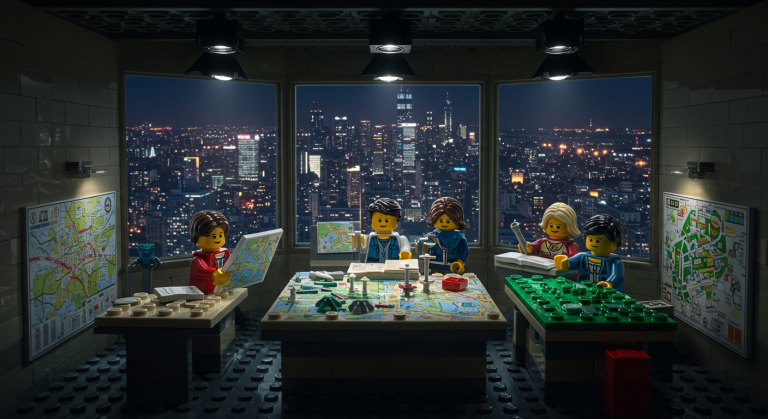
How Do Partners Contribute to Urban Learning?
Urban literacy in the project is a coordinated, multidisciplinary process in which each partner brings unique expertise:
PRISMA (Greece) contributes experience in spatial and environmental planning, enriching methodologies for mapping and exploration.
Kreativna stanica (Serbia) enhances the process with creative workshops and approaches to observing public space.
LOFS (Poland) integrates Adventure Learning with STEAM practices and the urban environment of Warsaw.
Smart Institute (Slovenia) develops digital elements and AI support, enabling students to interpret urban data through technology.
IPS Potenza (Italy) links urban challenges with tourism, hospitality and cultural heritage.
Corbiz (Türkiye) strengthens the digital and technological dimension of urban exploration.
This diversity makes the learning experience authentically European.
What Do Students Actually Learn Through Urban Exploration?
how to read maps and spatial clues
how infrastructure works and why people move the way they do
how to identify sustainable and unsustainable elements of a city
how to analyze public space in terms of safety, accessibility, and functionality
how to combine digital information with real-world observations
how to understand the city as a system rather than a collection of random places
This is urban literacy — a competence preparing young people for the world they will live, work, and create in.
Conclusion: When Young People Learn to “Read” the City, They Learn to Change It
Urban Expeditio shows clearly that students are not passive users of urban space — they are active interpreters.
Once they combine technology, exploration, observation, and teamwork, they discover that the city has layers that become visible only when approached with curiosity.
And once they learn to read the city — they begin to imagine how it can become better.
That is the essence of urban literacy and the heart of the Urban Expeditio vision.