
AI Providers Transform Educational Support: Enhancing Teaching Through Intelligent Learning Partners

Author:
Borut Razbornik
SMART
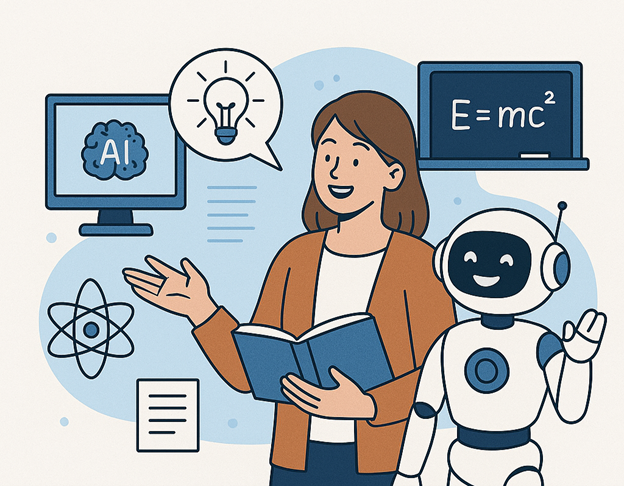
The Educational Challenge: Balancing Innovation with Pedagogical Excellence
Contemporary educators face unprecedented demands in their professional practice. The modern classroom requires differentiated instruction, personalised assessment, comprehensive student support, and efficient administrative management all while maintaining the quality and rigour of practical education.
For many teachers, this means fewer evenings at home and more time struggling to balance everything students need with what’s realistically possible in a day.
Recent developments in artificial intelligence have created a significant shift in how technology can support educational practice. Major AI providers, including OpenAI, Google, and Anthropic have evolved their platforms from simple answer-generation tools to sophisticated educational support systems designed to enhance rather than replace traditional pedagogical approaches.
This transformation mirrors innovative projects like Urban Expeditio, which demonstrates how AI can be integrated into adventure-based learning to develop critical thinking through gamified urban exploration. Such examples illustrate the potential for AI to enhance educational outcomes while preserving the essential elements of meaningful learning.
The Pedagogical Shift: From Information Delivery to Guided Discovery
Addressing Initial Educational Concerns
The introduction of large language models in educational settings initially raised significant concerns among educators and administrators. Early AI implementations often enabled students to bypass critical thinking processes, potentially undermining the development of essential analytical and problem-solving skills.
Educational research confirmed these concerns, with studies indicating that students who relied heavily on AI for direct answers showed decreased retention and reduced problem-solving capabilities compared to those engaged in traditional learning approaches.
The Evolution to Socratic AI
The breakthrough in educational AI came through the implementation of Socratic questioning methodologies. Rather than providing direct answers, these systems guide learners through structured inquiry processes that promote deeper understanding and independent thinking.
These tools don’t replace your expertise—they help you focus on what matters most: teaching and connecting with students. This approach offers several advantages for educational practice:
Enhanced Learning Outcomes:
- Promotes critical thinking development through guided questioning
- Maintains academic rigour while providing personalised support
- Enables differentiated instruction at scale
- Provides a consistent pedagogical approach across diverse learning contexts
Professional Support:
- Reduces time spent on routine administrative tasks
- Streamlines lesson planning and resource development
- Enables more focused attention on high-value teaching activities
- Supports professional development and continuous learning
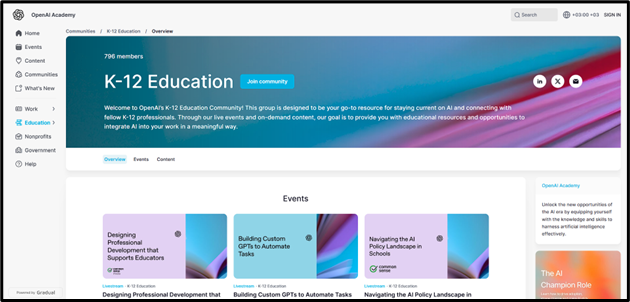
Study Mode: Structured Learning Support
OpenAI’s Study Mode represents a fundamental redesign of AI interaction for educational purposes. When students engage with study mode, they’re met with guiding questions that calibrate responses to their objective and skill level to help them build deeper understanding.
Example: A high school biology teacher uses Study Mode to help students work through complex genetics problems. Instead of providing direct solutions, the AI asks “What do you know about dominant and recessive alleles?” and “How might you approach this Punnett square step by step?” This allows the teacher to focus on students who need face-to-face support while others receive guided practice.
The system employs several research-based pedagogical strategies:
- Socratic questioning to promote analytical thinking
- Scaffolded instruction that builds complexity gradually
- Personalised adaptation based on individual learning needs
- Progress monitoring through interactive assessments
Practical Benefits for Teachers:
For many educators, this means fewer late nights spent creating different versions of the same assignment for various skill levels:
- Extended learning support beyond classroom hours
- Consistent pedagogical approach across different subjects
- Individualised assistance for diverse learning needs
- Reduced pressure for immediate student support during busy class periods
OpenAI Academy: Professional Development Initiative
OpenAI Academy provides comprehensive professional development resources designed specifically for educational practitioners. The platform offers self-paced training modules that accommodate the demanding schedules of working educators.
Core Program Components:
- Foundational AI literacy for educational contexts
- Practical implementation strategies for classroom integration
- Custom tool development without technical expertise requirements
- Best practice sharing through educator communities
Measurable Impact: Research indicates that educators using AI tools report saving an average of six hours per week. For most teachers, this represents the difference between sustainable work-life balance and burnout.
National Academy for AI Instruction
OpenAI’s commitment to educator support extends to a substantial investment in systemic change. The company is contributing $10 million over five years—$8 million in direct funding, and $2 million in resources including engineering support, computing access, and technical guidance to help teachers build and use AI tools in real classrooms.
This initiative aims to train 400,000 K-12 educators, representing approximately one in ten teachers in the United States.
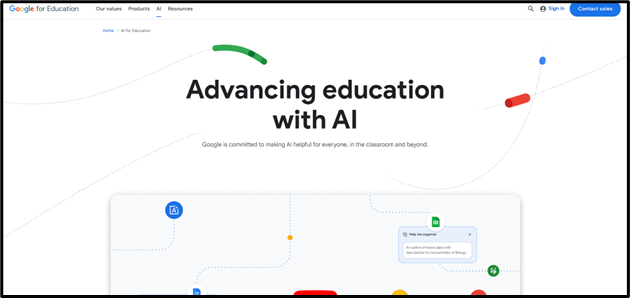
Gemini in Classroom: Integrated Educational AI
Google’s approach emphasises seamless integration with existing educational infrastructure. Gemini in Classroom includes more than 30 new features designed to help educators spend more time on the art of teaching rather than administrative preparation.
Example: An elementary teacher uses Gemini to quickly generate three different reading comprehension activities for the exact text—one for grade level, one simplified for struggling readers, and one with extension questions for advanced students. What used to take two hours of preparation now takes fifteen minutes.
Key Capabilities:
- Content generation for lesson plans and instructional materials
- Assessment development aligned with learning standards
- Student feedback systems for efficient, personalised responses
- Administrative support for routine communications and documentation
Professional Development and Training
Google’s educator training programs, developed in collaboration with MIT RAISE, provide structured learning pathways for AI integration. This self-paced course accommodates busy teaching schedules while offering hands-on, practical experience across disciplines.
The program addresses several key areas:
- Time management and efficiency improvement
- Personalised instruction development
- Creative lesson enhancement techniques
- Responsible AI implementation practices
Guided Learning: Adaptive Educational Support
Google’s Guided Learning feature provides an alternative to direct answer provision, instead offering step-by-step reasoning development through visual aids, interactive content, and adaptive questioning systems.
Educational Benefits:
- Multi-modal learning support through varied content presentation
- Adaptive difficulty adjustment based on student performance
- Conceptual understanding emphasises over memorisation
- Global accessibility through multi-language support
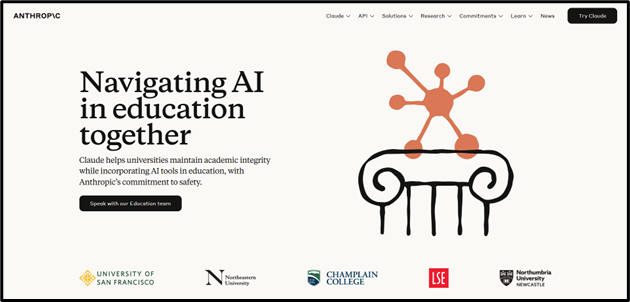
Claude for Education: University Partnership Model
Anthropic has developed comprehensive educational partnerships with major universities, including Northeastern University, the London School of Economics, and Champlain College. Claude for Education gives academic institutions secure, reliable AI access for their entire community.
Learning Mode: Socratic Educational AI
In Learning mode, Claude helps students develop independent thinking by asking, “How would you approach this problem?” instead of providing immediate solutions.
Example: A middle school social studies teacher assigns research projects on local history. Students use Claude in Learning Mode to develop research questions, evaluate sources, and organise their findings. The AI guides them with questions like “What makes this source reliable?” rather than simply providing information.
The system employs several pedagogical strategies:
- Socratic questioning to stimulate critical thinking
- Conceptual emphasis on fundamental principles
- Progressive complexity builds understanding systematically
- Structured support for research and writing processes
Research-Informed Development
Anthropic’s educational tool development is based on extensive research into student learning patterns. By examining over 574,000 conversations from higher education users, researchers identified valuable insights for educators navigating AI integration.
This research identified four primary interaction patterns:
- Direct problem solving for specific questions
- Content creation for assignments and projects
- Collaborative problem-solving for concept understanding
- Collaborative content creation for study materials
Implementation Strategies for Educational Professionals
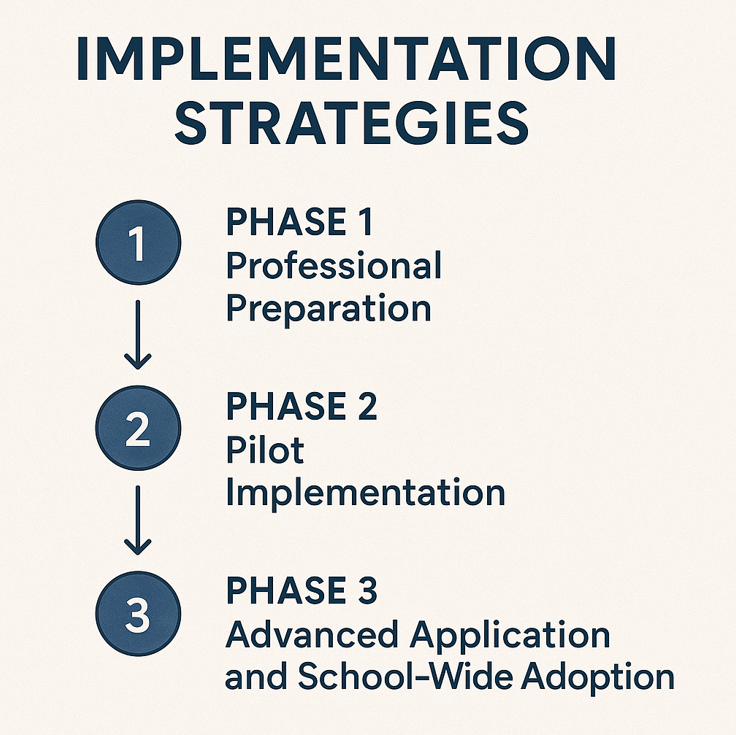
Phase 1: Professional Preparation
Foundation Building: Begin with comprehensive AI literacy training through available academies. Many teachers find it helpful to start with a straightforward task—perhaps generating discussion questions for an upcoming lesson—before expanding to more complex applications.
Example: A language arts teacher might begin by using AI to create vocabulary practice exercises, then gradually expand to developing rubrics and providing writing feedback.
Assessment and Planning:
- Evaluate current teaching challenges and time allocation
- Identify areas where AI assistance could provide the greatest benefit
- Consider student needs and learning objectives
- Plan a gradual implementation approach
Phase 2: Pilot Implementation
Classroom Integration: The key is starting small and building confidence. Many successful implementations begin with behind-the-scenes preparation rather than student-facing tools.
Example: A science teacher might use Study Mode to provide guided practice problems while working one-on-one with students who need extra support during lab activities.
Professional Practice Enhancement:
- Utilise AI for lesson planning and resource development
- Implement efficient feedback systems for student work
- Streamline administrative communications and documentation
- Develop personalised learning materials more efficiently
Phase 3: Advanced Application and School-Wide Adoption
Institutional Integration: As confidence and expertise grow, many educators become champions for broader implementation within their schools.
Example: After successfully using AI tools for a semester, a department chair develops training sessions for colleagues and works with administration to establish school-wide policies for responsible AI use.
Continuous Improvement:
- Monitor educational outcomes and time saved
- Refine implementation based on student feedback and performance
- Stay current with platform developments and new capabilities
- Share successful practices with professional learning communities
Addressing Implementation Considerations
Academic Integrity and Educational Ethics
Modern educational AI systems are designed with built-in safeguards to maintain academic integrity. Focusing on guided questioning rather than answer provision helps maintain the learning process while providing support.
For many teachers, this addresses the primary concern about AI in education: that it might replace learning with shortcut-taking.
Equity and Accessibility
Major AI providers have prioritised equitable access to educational tools:
- Free access for basic educational functions
- Multi-language support for diverse student populations
- Web-based platforms that work on any device
- Professional development opportunities for all educators
Professional Development and Support
Comprehensive support systems ensure successful implementation:
- Ongoing training opportunities and resource updates
- Community forums for peer learning and problem-solving
- Technical support for platform integration
- Research access to emerging best practices
Educational Benefits and Outcomes
Enhanced Teaching Efficiency
Educators implementing AI support systems report significant improvements in their professional lives:
“I used to spend my entire Sunday planning for the week. Now I can create differentiated materials in a fraction of the time, which means I actually have weekends again.” – Middle school mathematics teacher
- Reduced preparation time for lesson planning and materials development
- Streamlined assessment and feedback processes
- Improved personalisation for diverse learners
- Enhanced creativity in instructional design
Improved Student Learning Outcomes
Research indicates several positive impacts on student learning:
- Increased engagement through personalised instruction
- Better retention through scaffolded learning approaches
- Improved critical thinking through guided inquiry processes
- Enhanced accessibility for students with diverse learning needs
Professional Growth and Development
AI integration supports continued professional development without adding overwhelming new responsibilities:
- Expanded teaching toolkit through technology integration
- Improved understanding of student learning processes
- Enhanced collaboration opportunities with colleagues
- Leadership development in educational innovation
Future Directions in Educational AI
Emerging Capabilities
Several trends indicate continued evolution in educational AI:
- Multi-modal integration combining text, images, video, and interactive elements
- Real-time adaptation based on student performance and learning analytics
- Cross-curricular applications supporting interdisciplinary learning
- Global collaboration tools enabling international educational partnerships
School-Wide Integration
Educational institutions are developing comprehensive AI integration strategies:
- Policy development for responsible AI use across educational contexts
- Infrastructure planning for seamless technology integration
- Professional development programs for faculty and staff
- Student preparation for AI-enhanced learning environments
Research and Development
Ongoing research continues to inform educational AI development:
- Learning science integration to optimise educational effectiveness
- Long-term studies of AI impact on student outcomes
- Cross-cultural research to ensure global applicability
- Ethical framework development for responsible implementation
Conclusion: The Future of AI-Enhanced Education
The transformation of AI from information delivery systems to educational partners represents a significant advancement in educational technology. For teachers who have spent years managing impossible workloads, these tools offer genuine relief without compromising educational quality.
Projects like Urban Expeditio demonstrate the potential for AI to enhance traditional pedagogical approaches through innovative applications that maintain educational rigour while increasing student engagement. Major AI providers have responded to educational needs by developing comprehensive support systems that address real classroom challenges.
The emphasis on guided learning rather than direct answer provision addresses earlier concerns about AI undermining educational processes. These tools don’t replace teaching—they amplify good teaching by handling routine tasks and providing personalised support at scale.
For educational professionals, the current landscape offers unprecedented opportunities to enhance teaching practice while reclaiming time for the human elements of education that matter most. The availability of comprehensive training programs, free educational tools, and supportive professional communities provides a foundation for successful implementation.
The most effective educational environments will likely be those where skilled educators partner with AI systems to create learning experiences that combine the efficiency and personalization capabilities of technology with the wisdom, creativity, and human connection that define excellent teaching.
As the field continues to evolve, thoughtful implementation and commitment to educational excellence will ensure that AI serves to enhance rather than replace the fundamental human elements that make learning meaningful and transformative. The opportunity exists now for educators to shape this technological integration in ways that serve both their professional sustainability and their students’ success.